The Kid Is Not My Son – On Michael Jackson’s cultural immortality and complicated legacy
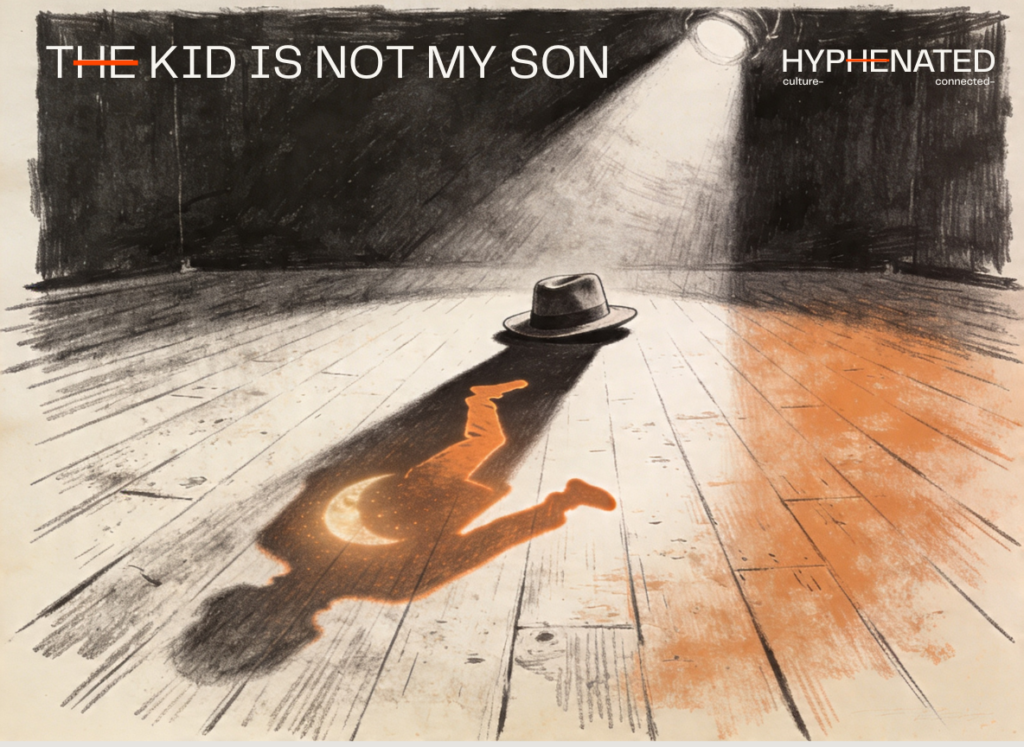
Below is just an excerpt of the entire article. The full article is on HYPHENATED. Click here to read.
Some legacies are complicated. Some are contested. And then there is Michael Jackson.
The King of Pop is in a category unto himself. His legacy is so enormous and so fractured that the culture has spent fifteen years arguing about what to do with it, while simultaneously being unable to stop listening to it.
HYPHENATED: Culture, connected is a reader-supported publication. To receive new posts and support my work, consider becoming a free or paid subscriber.
That’s also what HYPHENATED is all about: the spaces in between where two truths fit and live at the same time.
The Michael biopic opens on April 24th. His nephew, Jaafar Jackson, steps into the white glove, wearing the shoes that are genuinely impossible to fill. The first trailer gathered 116 million views in its first twenty-four hours — more than any musical biopic in history. That number is not just hype. It is a signal.
The world is still watching. The world is still listening. And the world still hasn’t made peace with what it feels.
That tension is worth sitting inside for a moment. Because I don’t think what we’re experiencing right now is nostalgia. Nostalgia is passive. What’s happening with Michael Jackson in 2026 is something more restless, a culture that keeps returning to a question it hasn’t been able to answer.
What do you do with someone who gave you everything and also took something?
I don’t have that answer. Nobody does.
But I’ve been thinking about what the music itself keeps telling us; specifically, what happens when other artists, across fifty years and every genre and language on earth, keep choosing Michael Jackson’s songs when they need to show the world what they can do.
That tells you something. That tells you everything.
What a Cover Reveals
There is a version of a song that belongs to the world, and there is the version that belongs to its creator. They are rarely the same thing.
When Chris Cornell — the voice of Soundgarden and Audioslave, one of the greatest rock singers of his generation — stripped “Billie Jean” down to an acoustic guitar in 2007, he didn’t just find a new arrangement. He found what the song had been hiding under twenty years of dancing. He read the lyrics as poetry. As a story. And he understood something the whole world had been moving too fast to notice: “Billie Jean” is not a triumph. It is a lament. It is the most famous song in pop history written by a man terrified of being accused of something he didn’t do, by someone he’d never met.
Strip away the bass. Strip away the production. Strip away the moonwalk and the fedora and forty-seven million viewers. What remains is a man saying: I’m being told I did something I didn’t do. And I’m afraid.
That is the song. That has always been the song. And it took a man with an acoustic guitar twenty years later to make the rest of us hear it.
That’s what the greatest covers do. They don’t copy. They excavate. They remove what time and fame and association have built on top of the original, and they return the song to its bones — where the real emotion lives.
And the fact that the greatest artists alive keep choosing Michael Jackson’s bones to excavate? That’s not coincidence. That’s a verdict.
The Latin Thing That Never Gets Talked About
I grew up in Colombia. And Michael Jackson was never foreign to me.
That sounds obvious. He was famous everywhere.
But I’m not talking about fame. I’m talking about something more intimate. Families in Bogotá who had never set foot in a record store could name every song on Thriller. Children who didn’t speak a word of English sang “Billie Jean” phonetically, with complete conviction, as if it were written for them. The moonwalk happened in living rooms across Medellín and Cali and Barranquilla long before YouTube made everything accessible. Michael Jackson was part of the architecture of Latin childhood in a way that I’ve never heard properly honored in English-language media.
When Tony Succar — a Peruvian-American musician — released Unity: The Latin Tribute to Michael Jackson in 2015, with a thirty-seven-piece orchestra and “Billie Jean” reimagined as a Latin jazz composition, the PBS special wasn’t introducing Michael Jackson to Latin America. It was showing America something it had chosen not to see: that the relationship had always been there. Deep, personal, and completely unacknowledged.
And then there is Luis Miguel. El Sol de México. The man with the voice that sounds like it was made for stadiums — covering “Blame It on the Boogie,” a Jackson 5 song, in Spanish, in 1992. It became one of the biggest hits of his career. Two men, two languages, two entirely different worlds — connected by the same song, by the same melody that doesn’t ask permission before it moves through you.
There’s something in that connection that feels personal to me. Michael Jackson crossed every wall that was supposed to stop things from crossing — language, class, geography, race, genre. He didn’t do that with strategy. He did it because the music was structurally, emotionally complete. Because you don’t need to understand the words to feel a bass line in your chest.
He was, in the truest sense, a human phenomenon. Not an American one.
I touched on all of this on my podcast Uncovering the Cover, which you can listen now on your favorite podcast platform.
The Uncomfortable Part
I can’t write about Michael Jackson without writing about this. And I won’t pretend it fits cleanly into the arc of everything else.
The allegations. The settlements. The trials. The acquittals. Leaving Neverland. The radio stations. The streaming drops. The ongoing impossibility of a verdict the culture can agree on.
I don’t know what the truth is. I don’t think most of us do. What I know is that genius and darkness can share the same body, and that holding both truths simultaneously — without resolving them into something comfortable — is the only honest position available.
What Al Sharpton said at Michael’s memorial has stayed with me for years: “Wasn’t nothing strange about your daddy. It was strange what your daddy had to deal with.”
I think about what it cost to be that famous. To be loved by people who didn’t know you and hated by people who didn’t know you, and to be unable in the dark to tell the difference. I think about a man who wrote “Billie Jean” — a song born from the terror of a woman who sent him a gun and told him to die — and turned that terror into the most recognizable bass line in history. That’s not a small act of transformation. That’s survival through art.
None of that exonerates anyone or anything. But it is the full picture. And the full picture is what we owe anyone whose life we’re willing to consume.
Why We Keep Coming Back
The Michael trailer broke a record before anyone had seen a single scene of the film. That’s not about nostalgia. Nostalgia doesn’t move at that velocity.
What it is, I think, is something more specific: an entire generation — maybe two — that grew up inside Michael Jackson’s music and never fully resolved (…)