Why is Santorini, Greece so magical?
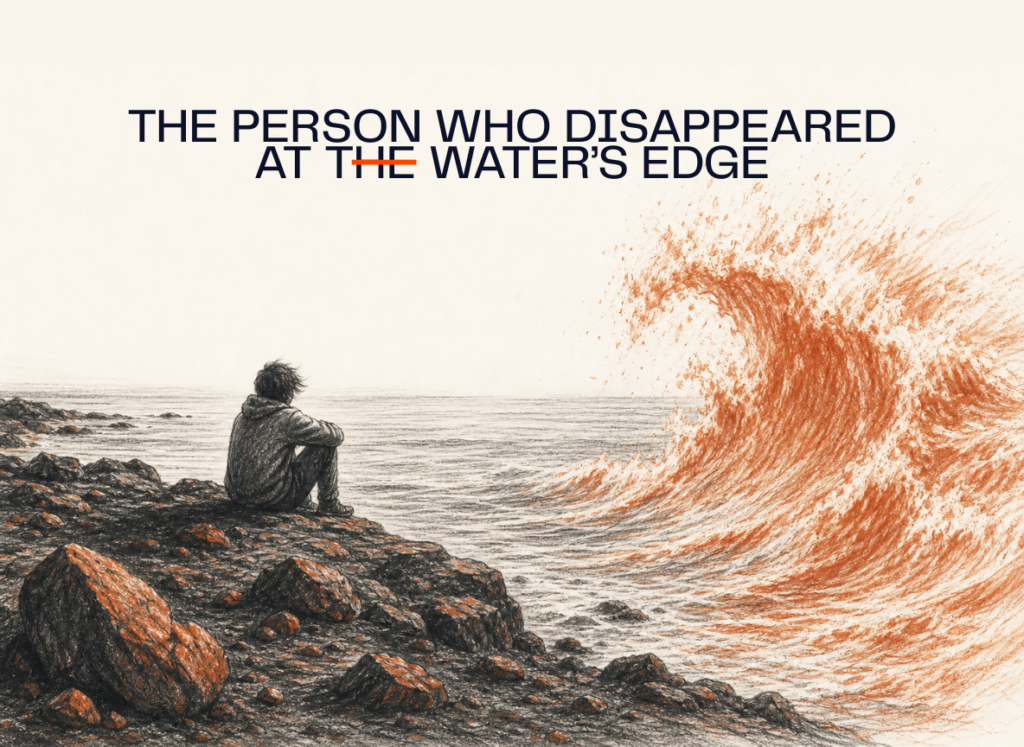
Below is just an excerpt of the entire article. The full article is on HYPHENATED. Click here to read.
There is a beach in Santorini that doesn’t look like a beach.
At least not in the way we’ve been sold on the ideal beach: there’s no white sand, no gentle foam dissolving into pristine shore. Just black volcanic rock, packed together in every size and shape imaginable… and if you look closely, really look, there is ruby in some of them. There is jade-like green. There is a stripe of something that looks like marble. There is orange stones that look like opals. There are stones that have been sitting under the Aegean Sea for thousands of years, shaped by volcanic fire and salt water and time, and they are not clean and they are not simple and they are not what anybody told you a beach was supposed to look like.
HYPHENATED: Culture, connected is a reader-supported publication. To receive new posts and support my work, consider becoming a free or paid subscriber.
That beach is called Kamari. And sitting at the edge of it — right where the water meets the rock — is where I disappeared for a while. The good kind of disappearing. The most powerful kind. The kind of disappearing that helps you find your purpose.
I was on a cruise through Italy, Montenegro, and Greece with my wife. Ten days of being nowhere in particular and everywhere at once. Ten days of narrow streets and ancient stones, wine and food that made you understand why people have been fighting over this part of the world for three thousand years. And somewhere in all of that — somewhere between the light on the Adriatic and the particular blue of the Aegean — I started to hear myself again.
I hadn’t realized how quiet I had gone.
What Happens When You Stop
There is a version of being stuck that doesn’t announce itself. It doesn’t feel like paralysis or crisis or breakdown. It feels like routine. It feels like managing. It feels like the perfectly organized to-do list, the inbox you’re on top of, the calendar that is full enough to feel productive but not so full that anything is actually happening.
You are not broken. You are just very, very busy being nowhere.
I know this version intimately because I have been living inside it for months at a time. The days fill up. The obligations multiply. The content sits half-drafted in a document somewhere. The idea you had at midnight slips away by morning. Not because the idea was bad, but because the part of you that believed in the idea was tired. Or scared. Or both.
Research has confirmed what most creative people already suspect: what we call creative blocks are almost never actually blocks. They are fear wearing productivity’s clothes. Fear that what you make won’t be enough. Fear that the audience won’t show up. Fear that showing up and being ignored might be the thing that confirms what you already secretly believe about yourself.
I know that fear. I have spent a remarkable amount of energy managing it.
And then I sat at the edge of the water in Santorini, and I did something I hadn’t done in a while. I asked the water a question out loud.
Give me answers.
And the waves came.
Not gently. Not symbolically. Physically. One after another, crashing into my body, feeding me those extraordinary volcanic stones, saturating my clothes, insisting on being felt. And I sat there, my polo getting drenched (“why did you to go to the water with your shirt on?”, my wife gasped), holding these rocks that are illegal to take home but are some of the most beautiful things I have ever touched, and I thought: this is what the work is supposed to feel like. Not clean. Not pristine. Not the image that somebody else gave you of what beautiful is supposed to look like. But real. Specific. Shaped by fire and salt and pressure and time. Unmistakably itself.
The beauty of that beach is not despite the black rock. It is because of it.
The Image We Were Given
We have all been handed an image of what creativity is supposed to look like. The person who wakes up inspired. The ideas that arrive fully formed. The work that flows without resistance. The audience that finds you immediately and tells you that what you made changed their life.
That image is a lie. And it is the single most effective tool for stopping people from making things.
Because when the work is difficult, when the essay comes out clunky, when the video doesn’t perform, when you publish something into apparent silence, the brain does not say that is normal. The brain says you were right. You don’t have enough in you. And you believe it, because the image you were given never included this part.
But here is what I know from every creative thing I have ever made that mattered: the version that looked wrong was usually the version that was most true. The essay that felt too personal was the one people forwarded to each other. The post I nearly didn’t publish was the one that kept generating messages months later. The beach with no sand is one of the most extraordinary places I have ever seen.
The cognitive science backs this up. Adam Galinsky’s research at Columbia found that immersing yourself in unfamiliar environments — genuinely foreign ones, not comfortable tourist ones — increases what he calls cognitive flexibility: the brain’s ability to move between ideas, to see connection where others see only difference. The Aegean did something to the way I was thinking. Not because it is beautiful, though it is. Because it is nothing like what I expected. And when you encounter something that doesn’t match the image you were given, your brain has to reorganize. It has to find a new category. And in that reorganization, in that small, private recalibration, something opens up.
Something that had been stuck starts moving again.
The Vacation You Already Paid For
There is a specific quality of presence that only a vacation forces.
You paid for it. You planned it. You are standing in a place you have never stood before, with a finite number of hours before it is gone and you are back home, sitting in front of the same screen, in the same chair, with the same to-do list. Your body knows this. And your body decides, usually without being asked, to be entirely here.
That presence is available to you all the time. The vacation doesn’t create it. It just removes the obstacles.
What I keep learning, and what I came home from the Mediterranean knowing more clearly than before, is that the obstacle is almost never a lack of ideas. It is a lack of permission. Permission to make the thing before it is perfect. Permission to publish before you are ready. Permission to put your work into the world for one person, or no person, or only yourself… and to call that enough.
There is research from Frontiers in Psychology suggesting that genuine psychological detachment during vacation — actually stepping away from (…)